

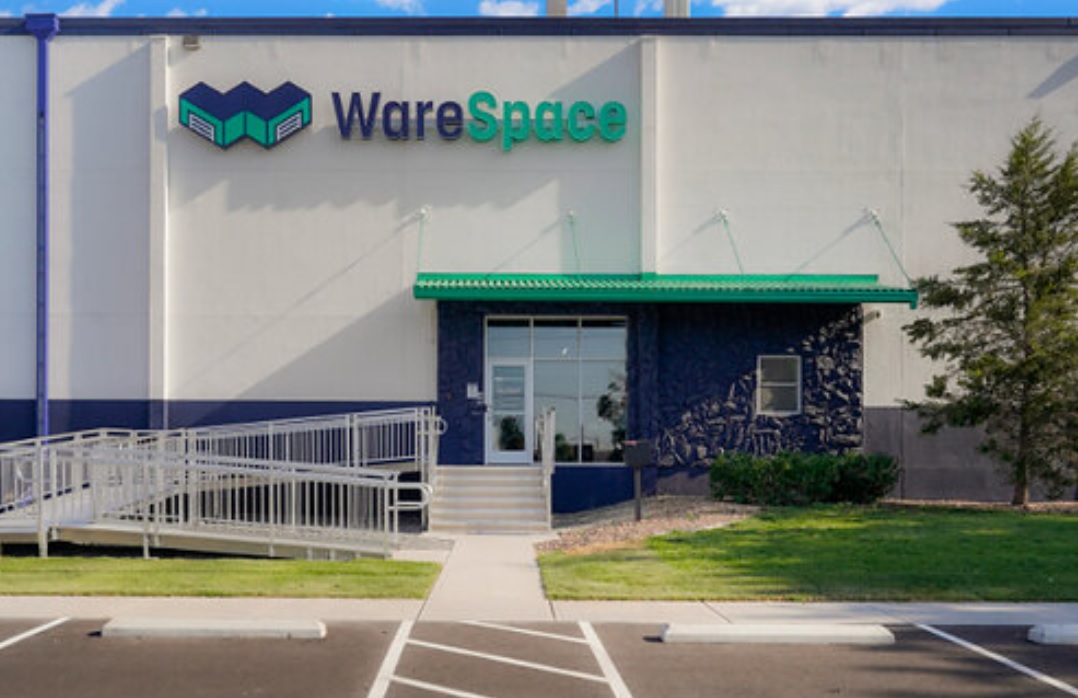
A 129,000-square-foot industrial building in Denver is being put to work for tenants whose individual warehouse requirements can start at just 200 square feet.
WareSpace is formally opening its Park Hill location at 5150 Colorado Boulevard on August 27, giving the micro-bay warehouse operator its second property in the Denver area and approximately 200,000 square feet across the two sites.
Private units at Park Hill range from 200 square feet to more than 2,000 square feet, with tenants sharing infrastructure including loading docks and shipping areas. WareSpace advertises six- to 12-month terms and pricing starting at $1,000 per month.
The contrast between the size of the underlying property and its individual units is central to the operating model. Rather than leasing the 129,000-square-foot asset to one or several conventional industrial occupiers, WareSpace is dividing its usable space into much smaller private warehouse units supported by common building infrastructure.
That puts the property within reach of occupiers whose requirements are measured in hundreds or low thousands of square feet rather than tens of thousands.
WareSpace acquired the Park Hill building off-market in July 2025. Contemporary property reporting put the purchase price at $12.25 million. At the time, the company said the property had more than 40 dock doors and was expected to begin leasing in spring 2026.
The August announcement indicates businesses are now operating from the site, although WareSpace has not disclosed how many units have been created, how many tenants have moved in or the property’s current occupancy.
The company is targeting users including ecommerce businesses, contractors and light manufacturers that need dedicated warehouse capacity but may not require a conventional industrial suite.
A business could, for example, begin with about 300 square feet and later move into 1,500 square feet within WareSpace’s model, according to the company. Chief operating officer Joseph Ely said the aim is to allow occupiers to adjust their warehouse footprint as their requirements change.
That flexibility is partly a function of lease duration. WareSpace’s advertised six- to 12-month terms are considerably shorter than the multiyear commitments commonly associated with conventional industrial leasing, although the company has not provided comparative occupancy-cost data showing whether its space is cheaper on a per-square-foot basis.
The landlord also markets its pricing as all-inclusive. Claims about savings relative to conventional leases cannot be independently assessed from the information disclosed.
Shared infrastructure is another important part of the model. Park Hill provides loading docks, shipping areas, year-round HVAC and on-site support, allowing individual businesses to use warehouse features without each occupying a standalone industrial building.
WareSpace has not disclosed how dock access is allocated among tenants, the amount of common space within the building or limits on pallet volumes, storage heights and equipment use.
The Park Hill opening follows WareSpace’s existing Denver-area operation in Centennial, a roughly 71,000-square-foot property at 360 Inverness Drive South.
WareSpace has said that facility was converted from a former call center, with warehouse infrastructure including dock wells added as part of the reuse. Park Hill, by contrast, was acquired as a substantial existing industrial asset.
Together, the two properties illustrate different routes into the company’s micro-bay model: adapting nontraditional space for warehouse use and subdividing existing industrial buildings for much smaller occupiers.
Broader Denver market data also provide context for the focus on smaller requirements.
Cushman & Wakefield reported 7.8% overall industrial vacancy in Denver during the second quarter of 2026, including direct vacancy of 7.4%.
Its first-quarter research showed leasing activity was driven primarily by small- and mid-sized requirements. More than 2.9 million square feet was leased across 236 transactions during the quarter, with leasing below 250,000 square feet nearly four times the volume recorded for deals of 250,000 square feet or more.
Those figures do not establish demand specifically for WareSpace’s 200- to 2,000-plus-square-foot units. They do, however, show that smaller and mid-sized requirements have been an active part of the wider Denver industrial leasing market.
Park Hill also gives WareSpace a more central Denver property than its Centennial operation. The company positions the site for businesses serving areas including Park Hill, RiNo, Five Points, Central Park, Aurora, Commerce City and downtown Denver.
The company now reports 32 locations nationally.
WareSpace has not disclosed the cost of converting the Park Hill building to the micro-bay format or the revenue and occupancy targets for the property.
Those figures will ultimately say more about the economics of the project. From an industrial real-estate perspective, however, Park Hill demonstrates a different way to use a mid-sized warehouse asset: retaining the scale and shared infrastructure of a 129,000-square-foot property while offering individual businesses footprints beginning at only a few hundred square feet.