

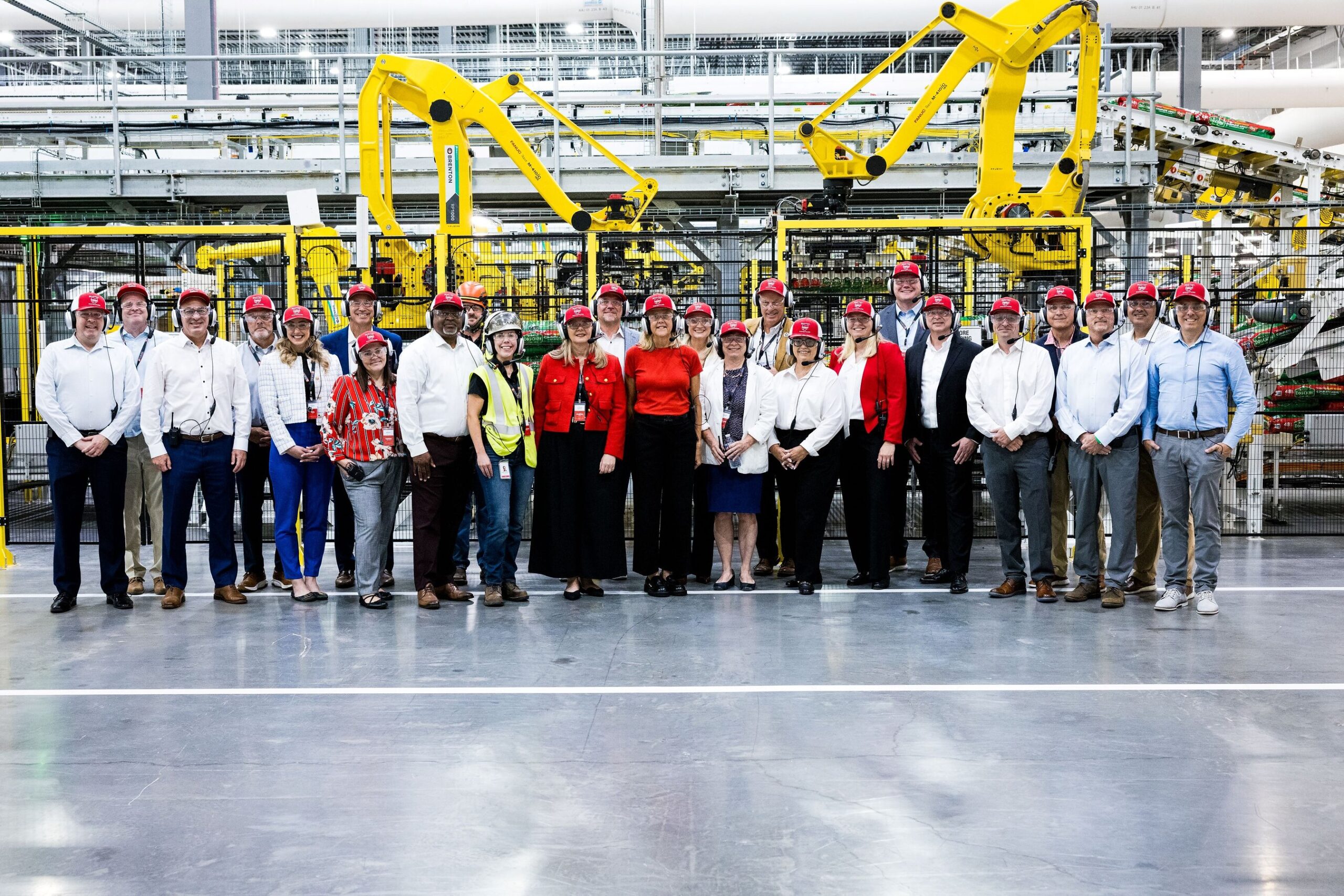
Nestlé Purina PetCare has opened a 1.3-million-square-foot pet food factory in Ohio with automated storage integrated into the manufacturing operation, creating a large-scale interface between production and finished-goods warehousing.
The Batavia facility represents an investment of more than $550 million and includes an automated storage and retrieval system within a building design that rises more than 10 stories.
Purina has not disclosed the height or configuration of the ASRS itself, but its inclusion makes warehousing a material part of the automation strategy at a factory producing dry pet food for brands including Purina Pro Plan, Purina ONE and Dog Chow.
The distinction matters. This is not a separate automated distribution center attached to a conventional factory.
Available company information indicates that the ASRS forms part of the site’s warehouse operation, where material handlers support automated storage while also loading and unloading finished products and using digital systems for shipping and receiving.
That effectively integrates production, storage and outbound logistics within the same 1.3-million-square-foot complex.
Purina has not said whether every finished-goods pallet passes through the automated system or whether other inventory categories are stored there.
It has also kept most of the ASRS engineering specifications private. The company has not identified the supplier, storage capacity, number of aisles, cranes or shuttles, pallet throughput, conveyor interfaces or warehouse software controlling the operation.
The factory nonetheless represents a substantial step beyond the automation scope Purina publicly outlined when it first announced the project in October 2020.
At that point, the company planned a $550 million, 1.2-million-square-foot facility incorporating robotics and digital tools.
At opening, the investment exceeds $550 million and the completed footprint is approximately 1.3 million square feet — about 100,000 square feet larger than the preliminary plan.
The workforce has expanded beyond the original expectations as well.
Purina’s 2020 plan anticipated more than 300 employees. More than 430 people now work at Batavia, and the company expects employment to exceed 500 when the operation is fully staffed.
That growth provides useful context for the factory’s automation.
Purina is deploying an ASRS, robotics and digital manufacturing systems while simultaneously building a workforce substantially larger than envisaged when the project was announced. The available information does not quantify how automation has affected labor requirements or productivity, so no direct labor-saving conclusion can be drawn.
The ASRS is one part of a wider technology architecture.
Purina says the plant uses advanced food-safety systems, robotics and digital manufacturing tools. Recruitment material for technical roles at Batavia also describes a controls environment spanning PLC- and PC-based automation, packaging systems and the ASRS.
Those job descriptions reference technologies including Allen-Bradley and Beckhoff PLCs and Ignition and AVEVA HMI/SCADA software across the wider plant environment. They do not establish which platforms specifically control the ASRS.
Purina is also using mobile robotics for equipment inspection rather than inventory movement.
Multimedia released with the factory opening shows a Boston Dynamics Spot robot operating at Batavia. Purina says the robot conducts thermal and acoustic inspections of machinery as part of the plant’s digital manufacturing program.
That function is separate from the ASRS: Spot is being used for machinery inspection and condition monitoring, not disclosed as a warehouse transport robot.
The factory becomes Purina’s 24th U.S. manufacturing location and its second manufacturing operation in Ohio alongside a Zanesville plant that has operated since 1973.
It is also the company’s first factory built from the ground up since 1975.
That blank-sheet development is operationally relevant because it allowed Purina to design automated storage and digital manufacturing infrastructure into the site rather than retrofit those systems into an existing factory.
The project was originally announced in 2020 with operations expected to begin in 2023. The formal opening ultimately took place in August 2026, and the reviewed sources do not provide a complete explanation for the difference between the initial schedule and the final opening date.
Purina selected the site at South Afton Industrial Park in Clermont County, about 30 miles east of Cincinnati. The company has cited the region’s workforce, manufacturing base and distribution opportunities among the reasons for locating there.
The plant is now producing dry pet food, and Purina says the operation will ultimately help supply food for approximately eight million pets annually.
That figure indicates the intended production scale but cannot be converted into warehouse throughput. Purina has not disclosed annual cases or tonnage, finished-goods pallet capacity, daily shipments or truck movements.
Those missing figures are particularly relevant given the scale of the automated storage installation.
The project establishes that Purina has integrated automated storage into a large new food-manufacturing operation, but it does not yet provide enough technical data to benchmark the warehouse against other high-throughput ASRS installations.
Storage positions, pallet movements per hour, system architecture and controls integration remain undisclosed.
For warehouse operators, those details will ultimately determine the significance of Batavia’s material-handling design. What is already clear is that Purina has treated finished-goods storage as part of the factory’s automation architecture rather than as an entirely separate downstream function — bringing manufacturing, automated warehousing and shipping together within its largest-ever manufacturing investment.