

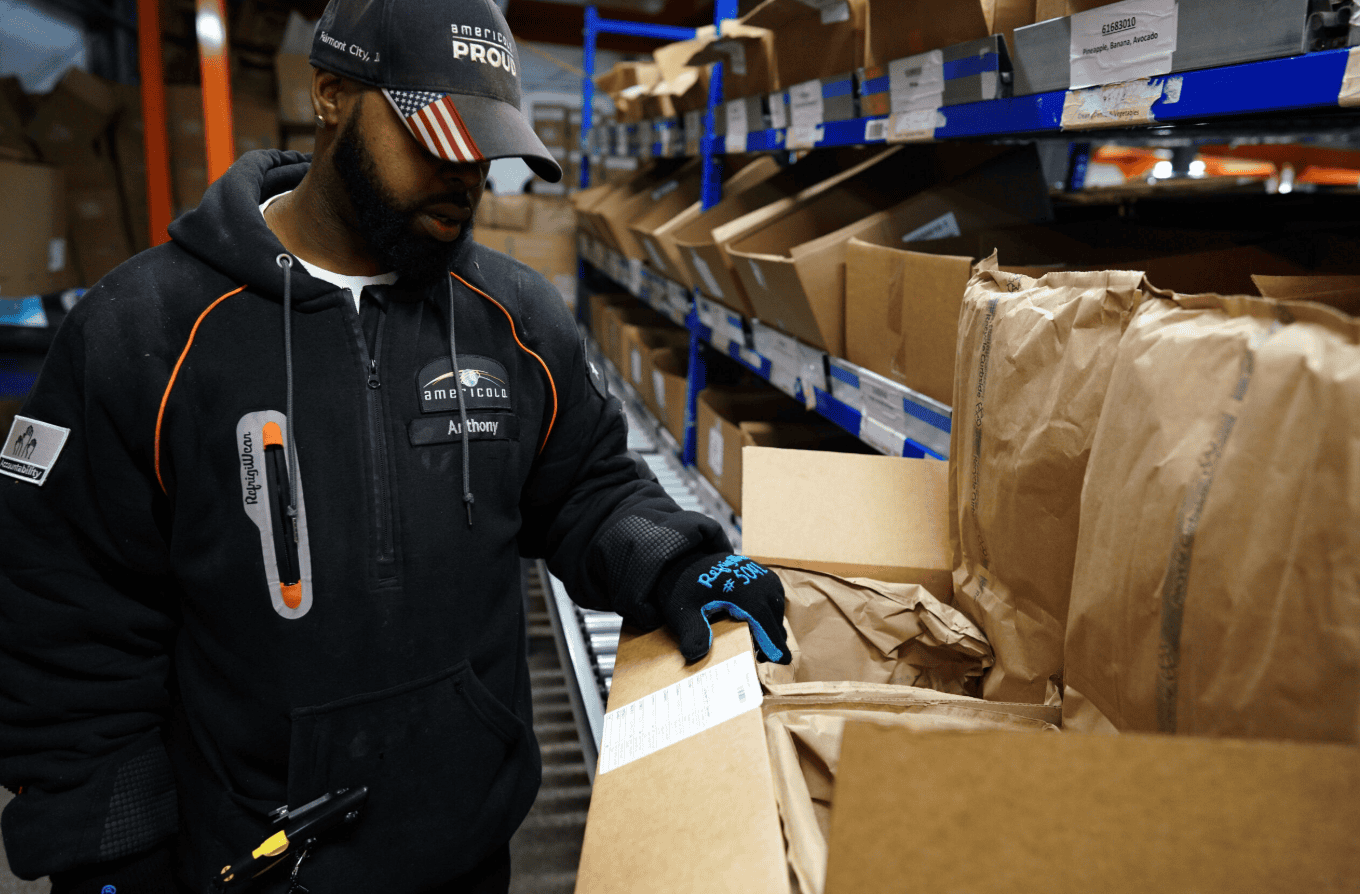
Americold is pushing its refrigerated warehouse network further downstream into consumer fulfillment, with more than one million direct-to-consumer packages shipped through its ecommerce operation over the past year.
The significance is less the parcel count than the change in warehouse workload. Instead of stopping at pallet and case handling, Americold’s DTC model extends into individual-order preparation, temperature-controlled packing and parcel shipment — functions that bring cold-storage facilities closer to conventional ecommerce fulfillment operations.
The company currently offers DTC capabilities across five U.S. sites and reports double-digit growth in the business. Americold says the network can reach approximately 99.5% of the U.S. population within two days or less, although it has not disclosed the five locations or the methodology behind that coverage calculation.
Good Ranchers, a direct-to-consumer protein company, is one customer using the service. Americold prepares individual orders, packages them and manages shipment while maintaining temperature-controlled handling. Good Ranchers founder and CEO Ben Spell said the arrangement has allowed the company to concentrate on its brand and customers as volumes have increased.
The operating model adds processes not normally associated with bulk refrigerated storage. Americold’s separate DTC service information describes multi-temperature storage, pick-and-pack operations, kitting, insulated packaging, dry ice and gel packs, parcel-carrier rate shopping and integration with ecommerce platforms.
Those requirements make parcel-scale cold-chain fulfillment materially different from moving pallets through a refrigerated distribution center. Each consumer order can require item-level picking, appropriate packaging for its temperature range, coolant, carrier selection and shipment visibility through final delivery.
The packaging requirement alone is substantial. Americold says its ecommerce operation shipped 6.8 million pounds of dry ice in 2025. The company does not disclose dry-ice consumption per shipment, packaging costs or the mix of frozen and refrigerated orders, but the figure illustrates the additional materials involved in moving temperature-sensitive products through parcel networks.
Software provides another layer. Americold uses its proprietary SmarTrakr platform to provide inventory visibility, fulfillment information and shipment tracking. Its DTC service materials also describe automated, temperature-driven order routing and inventory tracking across multiple temperature zones.
The available information does not establish SmarTrakr as a warehouse management, execution or control system, and Americold has not identified the underlying WMS or other warehouse software integrated with the platform. Nor has it disclosed whether robotics, conveyors or automated sortation are used at the five DTC sites.
Americold’s expansion into consumer fulfillment also fits a strategy disclosed to investors earlier this year. In its first-quarter regulatory filing, the company identified ecommerce growth and evolving distribution models among the trends affecting customer requirements and said it was pursuing organic growth across its existing warehouse portfolio.
DTC therefore represents an adjacent service opportunity within Americold’s existing warehouse portfolio. CEO Rob Chambers said the company is extending its traditional cold-chain role into more complex consumer-facing distribution models, while Americold has characterised ecommerce as an under-penetrated segment for future growth.
The move also changes where a cold-storage provider can sit in its customers’ supply chains. Under this model, warehouses that connect food producers with distributors and retailers can also take responsibility for the final fulfillment stages between refrigerated inventory and the consumer’s doorstep.
How attractive that business is economically remains unclear. Americold has not disclosed DTC revenue, margins, customer numbers, fulfillment costs, labour requirements or the capital invested to establish the five-site network. The company also provides no order-accuracy, on-time-shipment, spoilage or productivity data to substantiate its broader claims around fulfillment performance.
For Americold, the million-package milestone therefore provides evidence of operating scale but not yet of financial contribution or warehouse productivity. What it does demonstrate is a wider operating role for the company’s refrigerated facilities: beyond storage and bulk distribution, they can also function as pick-pack-and-parcel fulfillment nodes for food brands selling directly to consumers.