

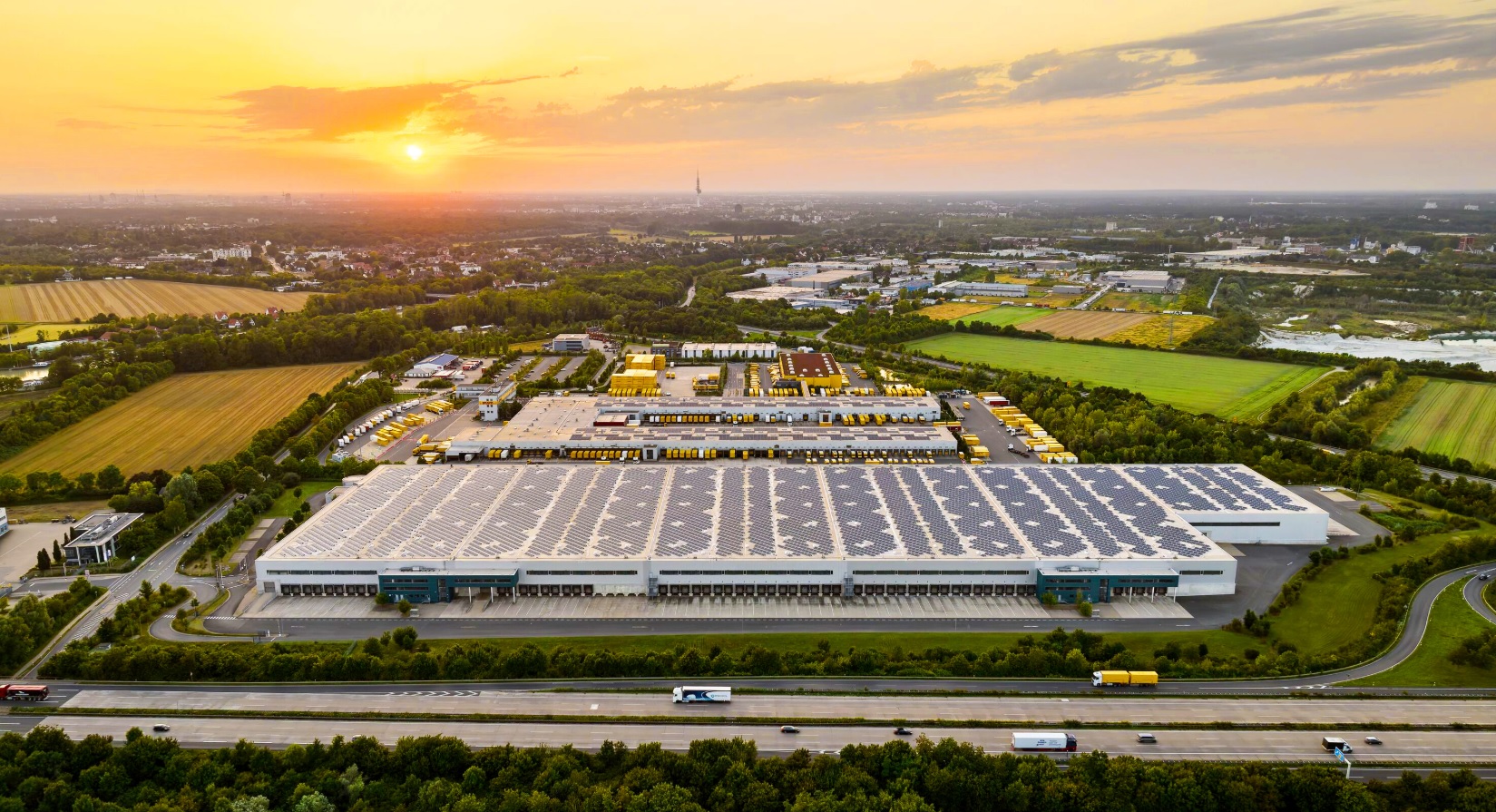
Prologis is positioning sustainability as an increasingly integrated part of logistics real estate operations, arguing that renewable energy, connected buildings and lower-carbon development are becoming core infrastructure rather than peripheral environmental initiatives.
In its 2025–26 Global Impact & Sustainability Report, the company outlines a strategy combining energy generation, building certification, lifecycle carbon assessment, digital monitoring and venture investment as part of a broader effort to support customer operations while adapting to changing energy and regulatory demands.
One of the report’s most significant milestones is the expansion of Prologis’ renewable energy platform. The company says it surpassed 1 gigawatt of combined solar-generation and energy-storage capacity across its owned and managed portfolio during 2025 and has established a new target of reaching 2 gigawatts by 2030. Regulatory filings published by Prologis indicate year-end capacity reached 1.1 gigawatts, including projects owned both by the company and by third parties operating within its portfolio.
Installed capacity, however, should not be interpreted as electricity generation. Prologis did not disclose annual energy production, battery-storage duration, customer electricity supplied or avoided greenhouse-gas emissions, making it difficult to assess the operational impact of the investment.
The report also highlights continued progress in sustainable warehouse development. According to Prologis, 100% of eligible logistics developments and redevelopment projects completed or underway during 2025 either achieved or were in the process of obtaining sustainable-building certification. The company also says more than one-quarter of its global logistics portfolio is sustainably certified and that certified properties account for 37% of the space leased by its 25 largest customers.
Those figures illustrate the scale of the programme but leave important questions unanswered. Prologis has not disclosed how many projects qualified as eligible, which certification systems were used, how much floor space is represented by the reported percentages or how certification levels vary across different regions.
The company is also expanding the role of carbon measurement during project design. According to the report, development teams use lifecycle assessments to evaluate the carbon implications of construction materials and building decisions before projects begin, while an internal carbon price is intended to incorporate emissions into investment decisions alongside cost and operational performance. However, Prologis has not disclosed the value of that internal carbon price or provided examples showing how it has influenced project selection or design.
Managing emissions from leased warehouses remains another area of focus. Prologis says its Scope 3 greenhouse-gas emissions in 2025 were 30% below its 2019 baseline, identifying customer energy consumption and development activity as the largest contributors within its value-chain emissions. The company also says improvements in utility-data collection have provided a clearer view of portfolio-wide energy performance.
That emphasis reflects a structural challenge for logistics property owners. While landlords own warehouse buildings, day-to-day energy consumption is typically controlled by tenants, making customer cooperation and accurate utility data increasingly important for emissions reporting. Prologis did not disclose absolute Scope 3 emissions, the categories included in its calculations or the extent to which improved performance resulted from operational changes rather than portfolio evolution or methodological adjustments.
Alongside physical infrastructure, the company is expanding its digital platform. Prologis reports that more than 4,500 buildings were connected through IoT-enabled systems supported by over 100,000 devices, which it says help optimise energy use and space management. The report also states that 90% of employees used AI-enabled tools during 2025 to automate workflows and support decision-making.
Neither initiative, however, is accompanied by quantified operational outcomes. The company has not published measured energy savings from its connected-building network, productivity improvements linked to AI adoption or information about the governance and performance of those digital systems.
Innovation also extends beyond Prologis’ property portfolio. Since launching in 2016, Prologis Ventures has invested $300 million in more than 50 early-stage companies, including businesses developing lower-carbon construction materials, autonomous building controls and energy-efficient cooling technologies. While those investments indicate areas of strategic interest, the report does not identify which technologies have been deployed across Prologis facilities or whether they have produced measurable operational or financial benefits.
Taken together, the report reflects a broader evolution in logistics real estate, with warehouse owners increasingly investing in energy infrastructure, digital building systems and emissions management alongside traditional property development. Whether those initiatives ultimately strengthen long-term business performance, however, will depend on future disclosure of measurable outcomes, including electricity generation, customer savings, emissions reductions and financial returns.